
Is a Rooftop Solar Plant Beneficial During the Monsoon Season? Everything You Need to Know
The arrival of the monsoon brings relief from the summer heat, but it also raises a common question among homeowners and businesses: “Will my rooftop solar plant work efficiently during the rainy season?” Many people believe that solar panels stop generating electricity when the sky is cloudy or when it rains. However, this is one of the biggest myths about solar energy.
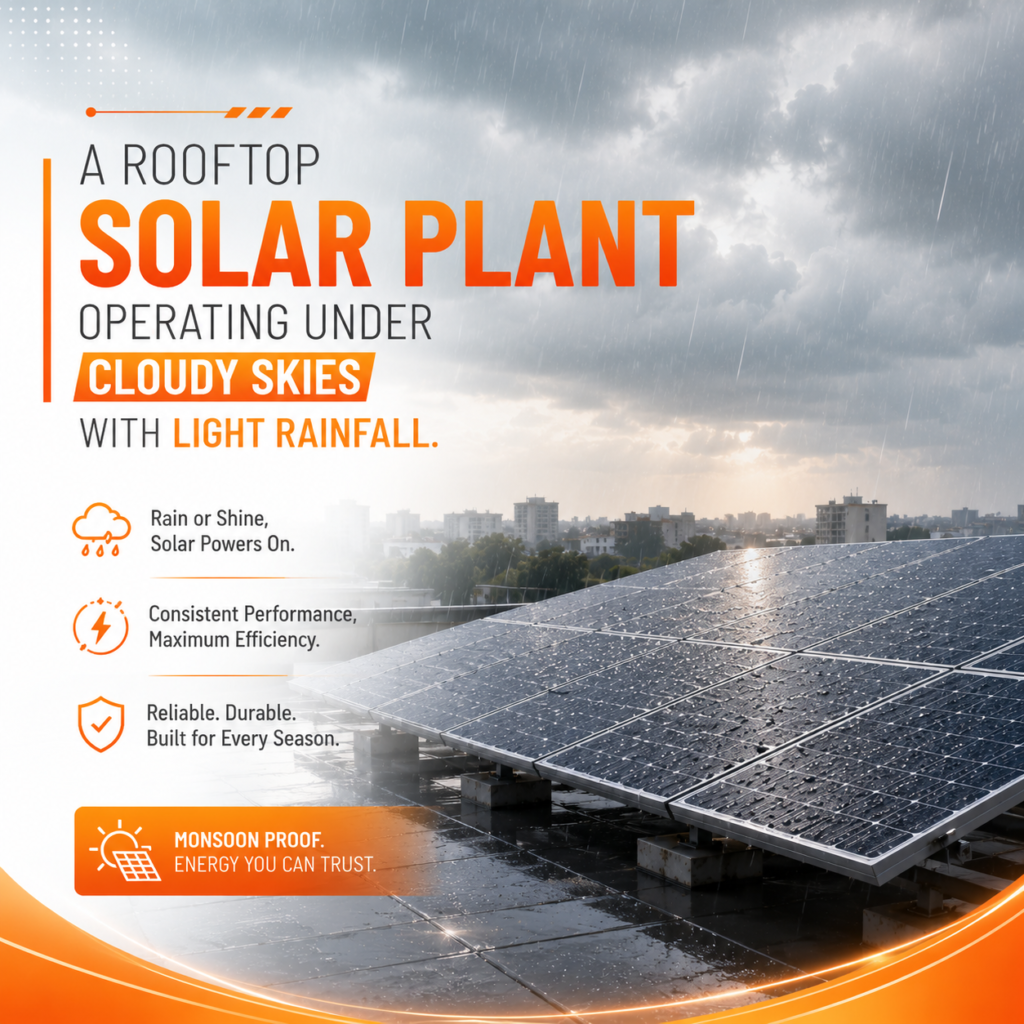
The truth is that a rooftop solar plant continues to generate electricity throughout the monsoon, although its output may be lower than during peak summer days. Modern solar technology is designed to capture both direct and diffused sunlight, making it a reliable source of renewable energy all year round.
In this article, we’ll explain how a rooftop solar system performs during the monsoon, its benefits, maintenance tips, and whether installing solar is still a smart investment if you live in a region with heavy rainfall.
How Does a Rooftop Solar Plant Work During the Monsoon?
A rooftop solar plant converts sunlight into electricity using photovoltaic (PV) cells. Contrary to popular belief, these cells do not require bright sunshine to produce power. They generate electricity whenever sunlight reaches the panels, including the diffused sunlight available on cloudy or rainy days.
During the monsoon, electricity generation may reduce by around 20–50%, depending on cloud cover, rainfall intensity, geographical location, and the orientation of the solar panels. However, this temporary reduction is usually balanced by higher power generation during the remaining months of the year.
Most professionally designed solar power systems are engineered based on annual solar irradiation rather than a single season. This ensures consistent yearly energy production and long-term savings.
Does Rain Improve or Reduce Solar Panel Performance?
Rain has both positive and temporary negative effects on solar panel performance.
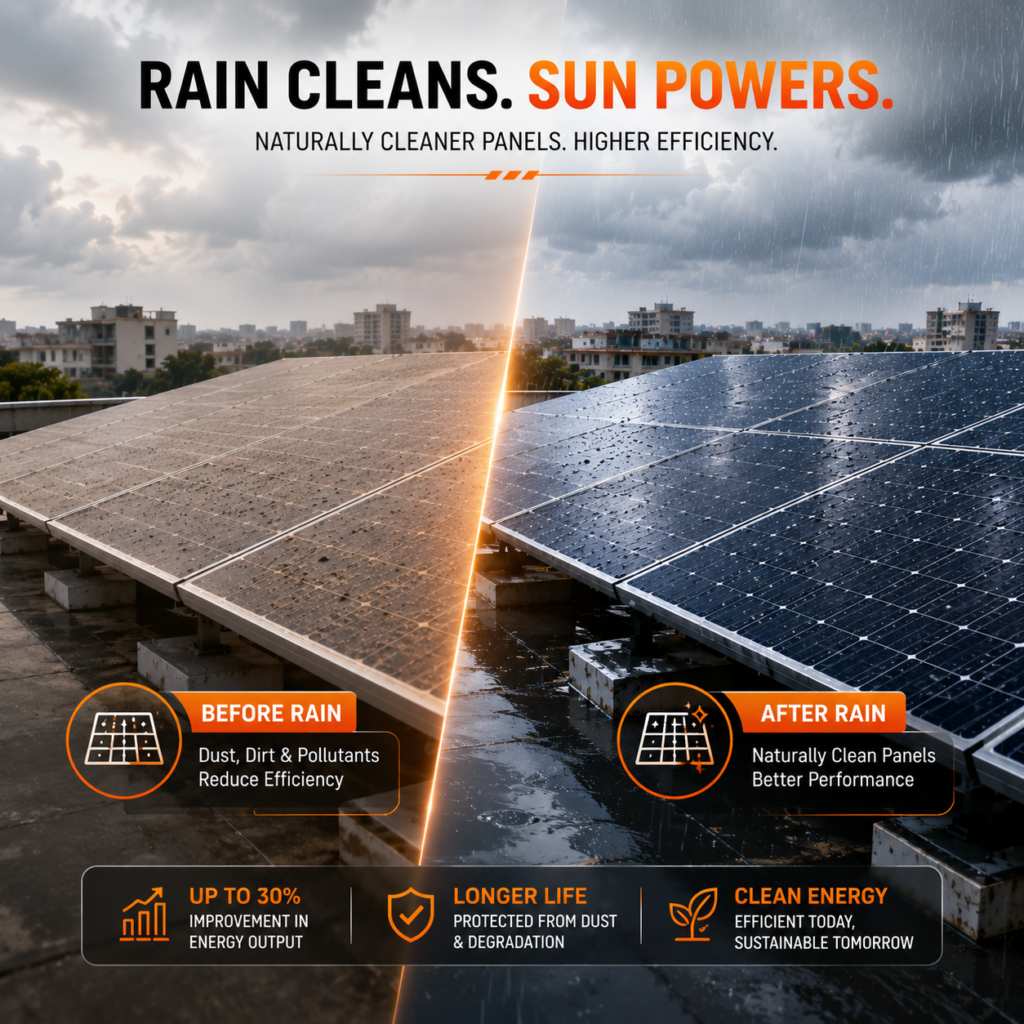
On heavily overcast days, reduced sunlight means lower electricity generation. However, rainfall naturally cleans the surface of solar panels, removing accumulated dust, pollen, and bird droppings. Cleaner panels absorb more sunlight once the weather clears, often improving efficiency without additional cleaning costs.
Modern PV modules are manufactured with durable tempered glass and weather-resistant frames. They are tested to withstand heavy rain, moisture, humidity, and varying temperatures, making them suitable for diverse climatic conditions.
Therefore, while short-term power generation may decrease during continuous rainfall, the cleaning effect of rain contributes to maintaining optimal performance over time.
Benefits of Installing a Rooftop Solar System Even During Monsoon
Many prospective buyers postpone solar installation because they worry about seasonal performance. In reality, a rooftop solar system remains beneficial throughout the year for several reasons.
1. Continuous Power Generation
Solar panels continue producing electricity even under cloudy conditions using diffused sunlight.
2. Lower Electricity Bills
Although monsoon generation may be slightly lower, annual savings remain substantial because solar systems produce surplus energy during sunnier months.
3. Net Metering Benefits
If your state offers net metering, excess electricity generated during high-production months can offset consumption during periods of lower generation, maximizing your return on investment.
4. Environment-Friendly Energy
A solar power system reduces dependence on fossil fuels and lowers carbon emissions throughout the year, regardless of the season.
5. Long-Term Investment
Modern rooftop solar plants have an operational life of 25–30 years. A few cloudy months each year have minimal impact on their long-term financial benefits.
Monsoon Maintenance Tips for Rooftop Solar Plants
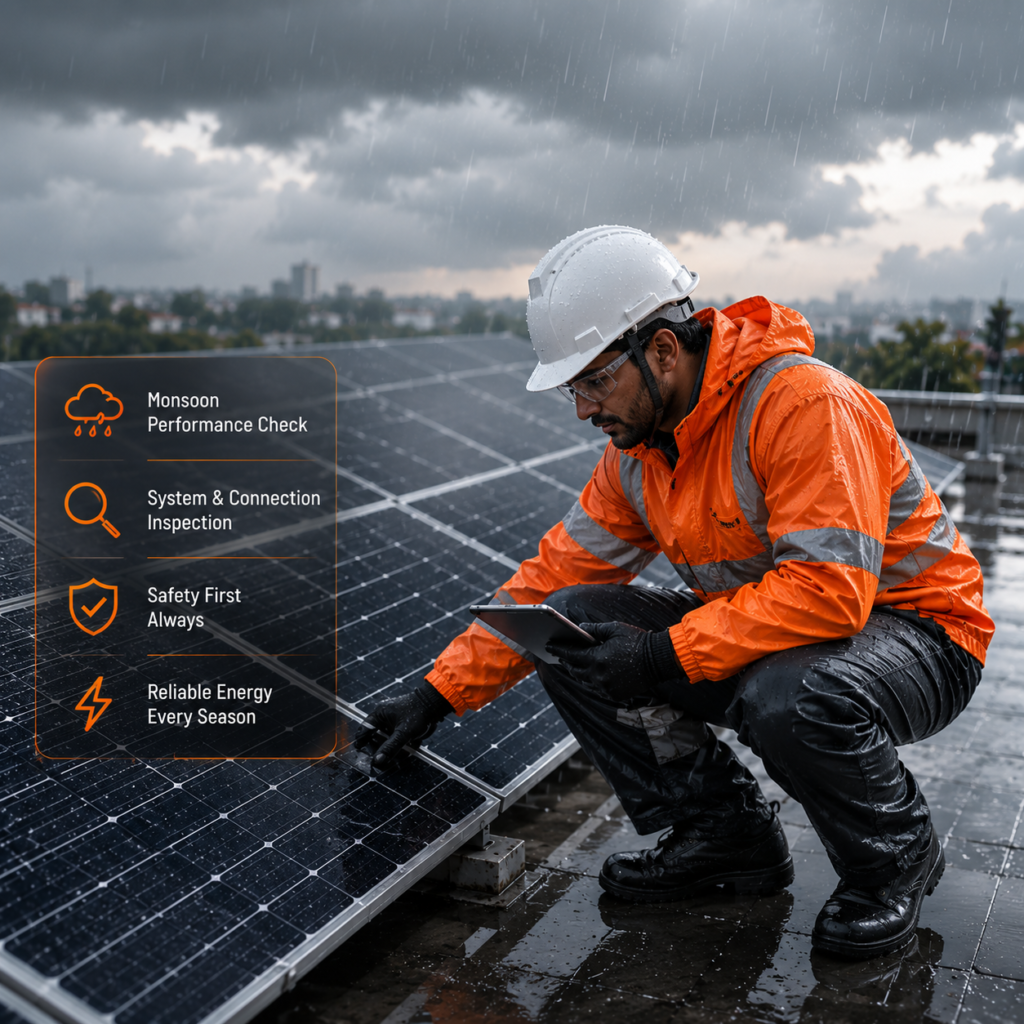
Although solar panels require minimal maintenance, following a few precautions during the rainy season can help maintain optimum performance.
- Inspect the mounting structure for any loose bolts or corrosion.
- Ensure rainwater drains properly and no waterlogging occurs around electrical components.
- Regularly monitor inverter performance using the mobile app or display panel.
- Keep surrounding trees trimmed to avoid excessive shading.
- Schedule preventive maintenance by a qualified solar technician at least once a year.
- Avoid climbing onto the roof during heavy rainfall for safety reasons.
Most quality solar installations are designed with waterproof connectors, weatherproof junction boxes, and proper earthing to ensure safe operation during monsoon conditions.
Final Verdict: Is a Rooftop Solar Plant Worth It During the Monsoon?
The simple answer is Yes.
A rooftop solar plant continues generating electricity during the monsoon using available sunlight. Although production may temporarily decrease because of dense cloud cover, this does not significantly affect the overall annual performance of the system.
Rain also helps keep solar panels clean, reducing dust accumulation and supporting better efficiency once clear skies return. When combined with proper installation, periodic maintenance, and net metering, a rooftop solar system remains one of the smartest long-term investments for homes, commercial buildings, and industries.
Instead of evaluating solar performance based on a single season, it is important to consider the total annual energy generation and savings. Over its lifespan of 25–30 years, a professionally installed solar power system delivers reliable electricity, lower energy bills, and meaningful environmental benefits.
If you’re planning to invest in renewable energy, don’t let the rainy season delay your decision. A high-quality rooftop solar plant is designed to perform throughout the year and continues delivering value even when the monsoon arrives.