
PM Surya Ghar in 2026: Is Rooftop Solar Still Worth It for Indian Homes?
In 2026, rooftop solar is not simply a question of lower power bills; the system must be sized, financed and documented correctly. Under PM Surya Ghar: Muft Bijli Yojana, the central rooftop solar subsidy lowers the investment, while roof conditions, electricity usage and equipment quality determine the return.
The short answer is yes for many Indian homes with a largely shade-free roof, a valid residential electricity connection and plans to remain in the property for at least five to seven years. However, a ‘zero bill’ is not guaranteed. Fixed charges, seasonal generation and your DISCOM’s import-export accounting still matter.
Is rooftop solar still worth it for Indian homes in 2026?
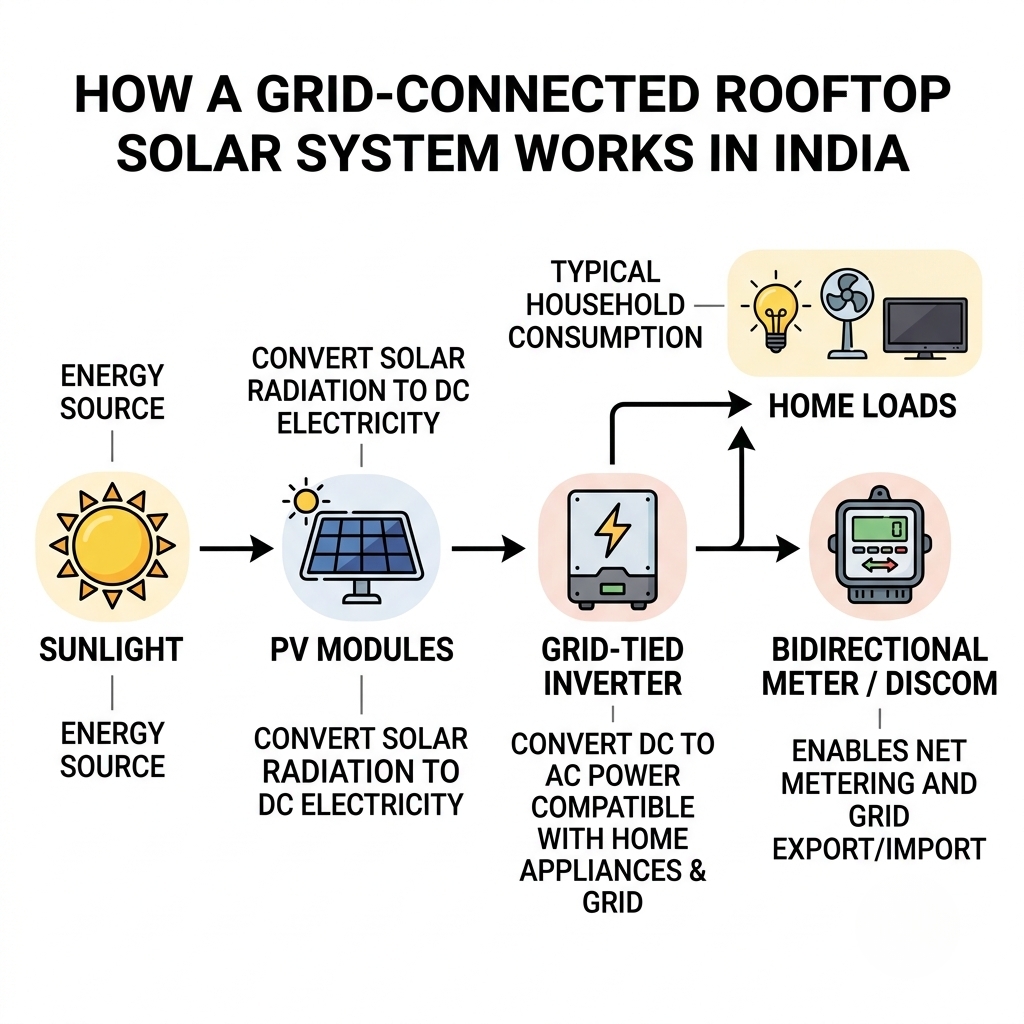
Rooftop solar is a photovoltaic system installed on a building that converts sunlight into electricity for the home; a grid-connected inverter synchronises that power with the utility supply. For households paying roughly ₹6 or more per unit, a well-designed 3kW solar system or 5kW system can commonly recover its post-subsidy cost in about five to seven years.
From a manufacturer’s perspective, the biggest forecasting mistake is focusing only on panel wattage. Savings depend more on unshaded generation, daytime consumption, tariff slabs, export credit and dependable support. The Government reported 39,72,447 rooftop systems installed by 22 July 2026, covering more than 48 lakh households
What rooftop solar subsidy is available under PM Surya Ghar Yojana 2026?
As of 8 August 2026, the official PM Surya Ghar portal lists central financial assistance of ₹30,000 per kW for the first 2kW and ₹18,000 for the next 1kW. The maximum subsidy is therefore ₹78,000 for an individual household, even when the installed capacity exceeds 3kW. A 3kW system receives ₹60,000 + ₹18,000 = ₹78,000; a 5kW system also receives a maximum of ₹78,000.
The phrase ‘up to 300 units of free electricity’ is often misunderstood. It does not mean every applicant automatically receives a 300-unit waiver. It describes the bill-reduction potential of a suitably sized system. Actual savings vary with sunlight, consumption timing, net-metering rules and fixed charges.
How do homeowners apply for the solar panel subsidy in India?
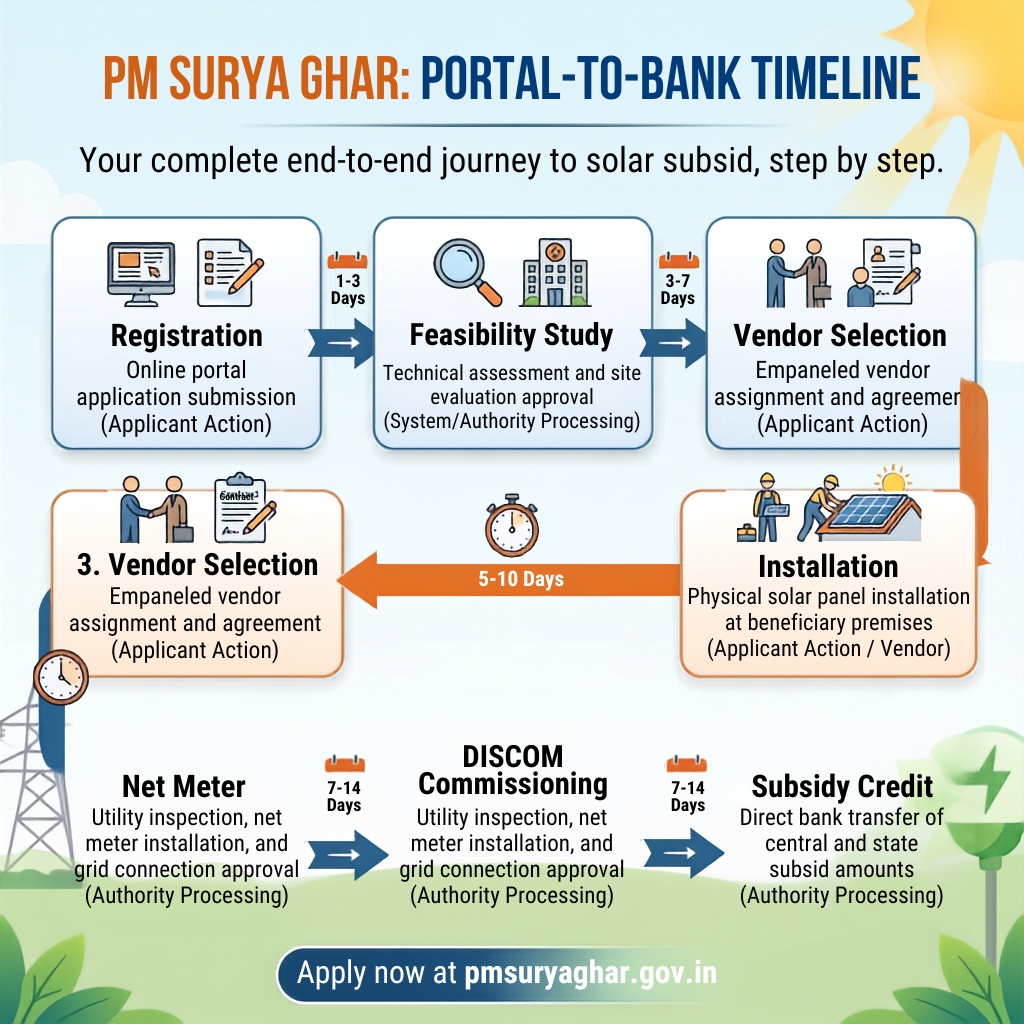
- Register on pmsuryaghar.gov.in using your state, DISCOM, electricity consumer number and mobile details.
- Submit the rooftop solar application and proposed capacity; obtain feasibility approval where your DISCOM requires it.
- Compare registered vendors and insist on an itemised proposal covering modules, inverter, structure, safety equipment, taxes, metering, warranties and timeline.
- Install portal-eligible equipment, then upload the plant details and request DISCOM inspection and net-meter commissioning.
- After commissioning, submit accurate bank details and redeem the central financial assistance; the approved subsidy is transferred to the consumer’s account.
- Retain the invoice, module and inverter serial numbers, commissioning report, photographs, warranties and generation-monitoring login.
Rooftop solar cost, monthly savings and solar panel ROI: 3kW vs 5kW
Residential quotations vary by city, roof height, module technology, inverter brand, structure and cable route. This example uses gross prices of ₹2.10 lakh for 3kW and ₹3.30 lakh for 5kW. Treat these as planning assumptions, not a universal price list.
|
Metrics
|
3KW Home System
|
5KW Home System
|
|---|---|---|
What should homeowners check—and is battery storage necessary?
Start with the roof: allow roughly 80–100 square feet per kW, excluding shade and access paths, and obtain a structural check for weak slabs or ageing metal roofs. The quotation should specify corrosion-resistant mounting, waterproofing, earthing, surge protection, DC isolators and solar-grade cables.
For modules, verify the exact model against current ALMM and portal records, and check BIS compliance, serial traceability, warranties and degradation terms. MNRE’s ALMM lists change, so an old brochure is not enough. For the inverter, prioritise local service, monitoring, warranty and design compatibility.
For a premium PV module manufacturer such as NextBrio Group, the responsible conversation begins with the home’s bill profile, roof conditions and documentable product specifications—not merely a high wattage label or the lowest quotation. A premium system should make its quality visible through paperwork, engineering and post-sale accountability.
Does rooftop solar need frequent maintenance?
Usually no. Keep modules reasonably clean, especially in dusty months, monitor generation and arrange a periodic electrical and structure inspection. Cleaning frequency depends on local dust, rain and bird activity.
Do I need a battery?
Not for bill savings. A standard grid-tied system is normally the most economical option, but it shuts down during a grid outage for safety. Choose a hybrid inverter and battery only when backup power is an important requirement.
Can every roof support solar panels?
No. Significant shade, limited area, disputed ownership, weak structure or planned reconstruction can make installation unsuitable or require redesign.
How should I choose a reliable installer or manufacturer?
Use the official portal, compare at least three itemised proposals, verify eligible models, inspect reference installations and judge service commitments as carefully as price.
Verdict
PM Surya Ghar Yojana 2026 keeps rooftop solar financially attractive, particularly for homes with a sound, unshaded roof and meaningful electricity consumption. Before signing, request a roof survey, generation estimate, single-line diagram and written 25-year financial model. A transparent evaluation today protects decades of solar panel ROI